
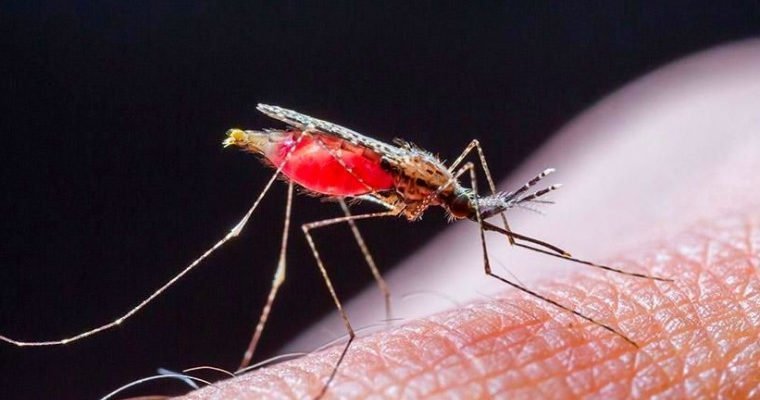
The Federal Service for the Supervision of Consumer Rights and Welfare has analyzed the malaria situation in the world and in the Russian Federation in 2021 and reports the following.
In recent years, progress in the fight against malaria worldwide, especially in the African continent, has slowed down due to a lack of funding for international and national malaria control efforts, as well as the COVID-19 pandemic. In 2020, the total number of malaria cases in the world amounted to 241 million (229 million in 2019), and the disease claimed the lives of over 627,000. people (409 thousand in 2019). The rise in malaria cases and deaths has been linked to health disruptions during the COVID-19 pandemic.
In the Russian Federation, in 2021, the number of imported malaria cases increased by 62% and amounted to 94 cases (incidence 0.06 per 100,000 population) compared to 58 cases in 2020 (0.04 per 100,000 population).
In the structure of cases, the adult population constituted 99%. One case of malaria (in a 5-year-old child) was reported in children under 17 years of age.
In 2021, 4 types of malaria pathogens were identified in patients with malaria: P.falciparum — 73 cases, P.vivax — 13 cases, P.ovale — 4 cases, P.malariae — 4 cases; mixed form — 1 case (P. falciparum + P. Malariae.
All cases of malaria recorded in 2021 were imported from countries outside the CIS.
69 cases of tropical malaria, 6 cases of three-day malaria and 4 cases of four-day malaria, 3 cases of oval malaria and 1 case of mixed malaria were imported from 22 countries of the African continent.
4 cases of three-day-old malaria and 1 case of tropical malaria were imported from 2 South American countries (Venezuela, Guyana).
3 cases of three-day malaria, 2 cases of tropical malaria, and 1 case of malaria were imported from 3 states of Asia (India, Syria, Pakistan). — oval malaria.
The maximum number of malaria cases (27 cases or 28.7% of all cases) was imported from the CAR.
In 2021, cases of malaria were registered in 32 entities of the Russian Federation (in 2020 — in 24 entities). The largest number of cases of malaria was recorded in the cities of Moscow (26 cases), St. Petersburg (13 cases), Rostov Region (5 cases), Republic of Bashkiria, Krasnodar Territory — 4 cases each.
Malaria was imported in 74 cases (79%) by citizens of the Russian Federation, and in 20 cases (21%) by citizens of other countries who visited the Russian Federation, mainly for tourism (home and family visits) and educational purposes. Russian citizens contracted malaria in the territories of endemic countries, visiting them for business (30 cases), tourism (22 cases), official (22 cases). The duration of stay of Russian citizens who contracted malaria in 2021 in the territory of endemic countries ranged from 5 days to 2-5 years.
Infection of Russian citizens with malaria while in endemic countries indicates a lack or lack of preventive measures.
The severity of the course of malaria and the prognosis of the outcome of the disease largely depend on the speed of diagnosis.
The analysis showed that in 2021, 30% of malaria patients sought medical help in the first three days after the onset of the disease symptoms (in 2020 — 57%), 44% of cases — on days 4-7, 14% — in days 8-14 days, 11% — for 15 days or more, which also indicates a lack of vigilance about malaria in the patients themselves.
According to the results of the analysis of maps of epidemiological studies of malaria cases, the main clinical symptom in all malaria patients was fever with chills. Patients complained of, among others, weakness, pain, pain in muscles, bones, lower back, runny nose, sweating and sore throat, cough, lacrimation, sweating, headache and dizziness, nausea, vomiting, loose stools, abdominal pain.
Clinical symptoms were noted in the first three days in 9.6% (9 cases), from 4-7 days in 21.3% (20 cases), from 8-14 days in 26.6% (25 cases), from 15 and more days in 31.9% (30 cases) after returning from endemic countries. In 10.6% (10 cases), clinical symptoms occurred in the endemic area.
The primary diagnosis of malaria among the cases in 2021 was made in 75% of patients. In the remaining cases, the initial diagnosis was made: acute upper respiratory tract infection, SARS, fever of unknown origin, COVID-19, community-acquired pneumonia, acute intestinal infections, gastroenteritis, colitis; viral infection of unspecified etiology, hemoblastosis; hemorrhagic fever with renal syndrome (Moscow (6 cases), St. Petersburg (3 cases), Republic of Bashkiria, Kemerovo region and Altai (2 cases each); Republic of Crimea, Sevastopol city, Moscow, Novosibirsk, Orenburg, Oryol, Rostov region (1 each) case).
In 2021, 5 (5.3%) deaths (in 2020 — 9 cases) from tropical malaria imported from countries of the African continent (Nigeria, Tanzania, Ethiopia, Sudan) were registered in the Russian Federation, among people from Kaliningrad, Moscow, , The Republic of Bashkiria, the city of Moscow (2 cases), including a child of 5 years old. The causes of deaths were late diagnosis due to the similarity of symptoms to COVID-19, acute intestinal infections, and food poisoning in the early stages of the disease.
According to the Malaria Reference Monitoring Center, which operates on the basis of the Tyumen Research Institute of Rospotrebnadzor Regional Infectious Pathology, errors in the identification of malaria pathogens and quality violations were again recorded in the preparation of blood preparations in several entities of the Russian Federation. So, in the Krasnodar and Krasnoyarsk Territories, the city of Saint Petersburg, the pathogen type was incorrectly identified, in the Republic of Bashkiria, the Republic of Chuvashia, mixed forms were omitted. As before, fat-free glasses are used in the preparation of blood products in many territories; the technology of preparation of the «thick drop» preparation is violated when instead of two drops on the glass one is used (Altai Territory, Kemerovo Region, Perm Territory, Khanty-Mansiysk Autonomous Okrug-Yugra); there is no labeling of blood products (Krasnodar Territory, Republic of Bashkortostan after 1 case); the dimensions of the «thick drop», «thin smear» do not meet the standard (Udmurt Republic, Yaroslavl region); the packing rules are not followed, as a result of which the glass delivered to the reference laboratory was broken (Perm Territory).
In addition, the results of tests of blood products for malaria do not indicate the stage of development of the pathogen (Perm Territory), quantification of the number of parasites in 1 μl of blood (Sevastopol, Udmurt Republic, Chanty-Mansi Autonomous Okrug-Yugra, Samara, Jarosław, Tulskaja, Kemerovo, Tver regions , Perm regions, Altai).
In 2021, blood products from malaria patients were not delivered to the reference malaria monitoring center for confirmation of a laboratory diagnosis for 4 people: Moscow region (1 case); Pskov region (1 case); Rostov region (1 case); Sverdlovsk region (2 cases). From the Tver region, blood products for malaria were only presented 5 months after the case was registered.
By analyzing the maps of epidemiological studies of malaria cases, errors and inaccuracies in their filling were again revealed. So, on the maps of epidemiological studies of malaria cases and outbreaks from the regions of Voronezh, Omsk, Penza, Tula, Krasnodar and Krasnoyarsk, the Republic of Bashkiria, Udmurt, Chuvash republics, Autonomous Okrug-Yugra Khanty-Mansiysk, the city of St. Petersburg, there is no classification for definitive diagnosis indicative of species (three-day, tropical, four-day, oval). The presented maps do not contain information about the origin of the malaria case (imported from abroad, imported from Russia, secondary from import, vaccinated) (Kaliningrad Oblast, Omsk, Penza, Samara, Sverdlovsk, Tomsk, Tula, Jarosław regions, Altai, Krasnodar, Krasnoyarsk regions, Udmurt, Chuvash republics, Khanty-Mansiysk Autonomous Okrug of Yugra, city of St. Petersburg). Forms of manifestation are not indicated (early, late manifestations, relapses, parasitism) — Voronezh, Kemerovo, Omsk, Penza, Tomsk, Tula regions, Krasnodar, Krasnoyarsk Territories, Udmurt, Chuvash republics, Khanty-Mansi Autonomous Okrug-Yugra, Moscow cities and Saint Petersburg. In the line «data on the last vaccination» there is no information about chemoprophylaxis (Kaliningrad Oblast, Novgorod, Rostov, Samara, Sverdlovsk, Tver, Tula region, Krasnodar, Krasnoyarsk, Perm regions, Udmurt Republic) and the name of the drug, terms of chemoprophylaxis at the site of infection , regularity and duration of drug intake, adherence to dosage (Kaliningrad and Rostov oblasts, Krasnoyarsk Territory, Khanty-Mansi Autonomous Okrug-Yugra, Moscow and Sevastopol cities). In the Republic of Bashkortostan, in the case of tropical malaria, cellar insecticidal treatments are indicated.
On April 25, 2022, the world community will celebrate World Malaria Day for the sixteenth time. In 2022, this campaign is titled «Ready to Fight Malaria» (Ready to Fight Malaria).
.


